
 Mi-Light & MiBoxer
 Sunricher
 MEAN WELL


Power Supplies and Drivers
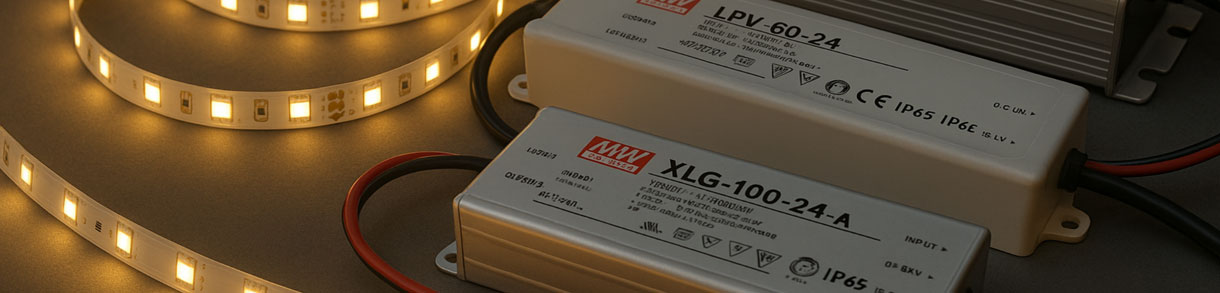
The LED Power Supply (LED Driver) is a crucial component designed to convert electrical power to the appropriate voltage and current for LED lighting systems. It ensures stable and reliable operation of LED lights by regulating the power input to prevent damage from voltage fluctuations. Suitable for a variety of applications, including LED strips, panels, ceiling lights, and outdoor lighting, this driver is designed for high efficiency and energy savings. Available in different wattages and output configurations, it provides a seamless and safe power supply to your LED fixtures, enhancing performance while extending their lifespan. Ideal for both residential and commercial installations, the LED driver supports consistent, flicker-free illumination.


Power Supply & Driver Frequently Asked Questions
Can I Connect Multiple Devices to One Power Supply?
Yes, you can connect more than one device to a power supply. However, the combined devices' wattage cannot exceed the power supply output. Your power supply should have a wattage that is 20 percent greater than the wattage of the lights. The voltage of the lights and the power supply should also match. For example, if you’re connecting 24V lights, the power supply should also be 24V.
Should I Use a Constant Current or Constant Voltage Power Supply?
A constant current power supply delivers a constant steady current through fluctuations in voltage. Constant voltage is when the voltage remains steady by increasing or decreasing the current. The decision to use constant current or constant voltage power supplies depends on the internal components. Constant voltage is often used for computers and electronics, but you might use constant current to power LED strip lights.
What’s the Difference Between Alternating Current and Direct Current?
Alternating current (AC power supplies) describes an electrical current in which the voltage switches back and forth. Direct current (DC power supplies) refers to the current where the voltage flows in one direction.
How Do I Determine the Voltage I Need From My Power Supply?
Power supplies will have an input and output voltage. Input voltage indicates the voltage value it can intake. Commercial applications usually require a greater input voltage (240 VAC) than residential applications (120 VAC). Output voltage is the power delivered the device. For example, you might see strip lights or printers using a 24V power supply, compared to electric scooters or telecommunication centers that might use a 48V power supply.
What is the Difference Between an LED Driver and a Power Supply?
People often use the terms LED driver and LED power supply interchangeably. ‘Driver’ can often refer to constant current or constant voltage power sources to run LEDs. ‘Power supply’ can refer to electrical devices that convert power to the needed voltage for electrical devices not just limited to lighting, but also for computers, televisions, electric golf carts, and more.
How Do I Know if My Power Supply Is Failing?
There are a couple of indicators your power supply isn’t working correctly. For lighting, you might notice flickering. For other applications, buzzing noises, power failures, and overheating can indicate incompatibility. To try to protect your power supply against failing, always ensure you’re using the correct voltage and wattage output and not installing in an area prone to high heat or debris. If none of these are causing the issue, there could be issues with the actual power supply, including poorly assembled parts.